Maritime, Transportation & Logistics
Shipping, Charterparties, Cargo Claims & Maritime Dispute Resolution
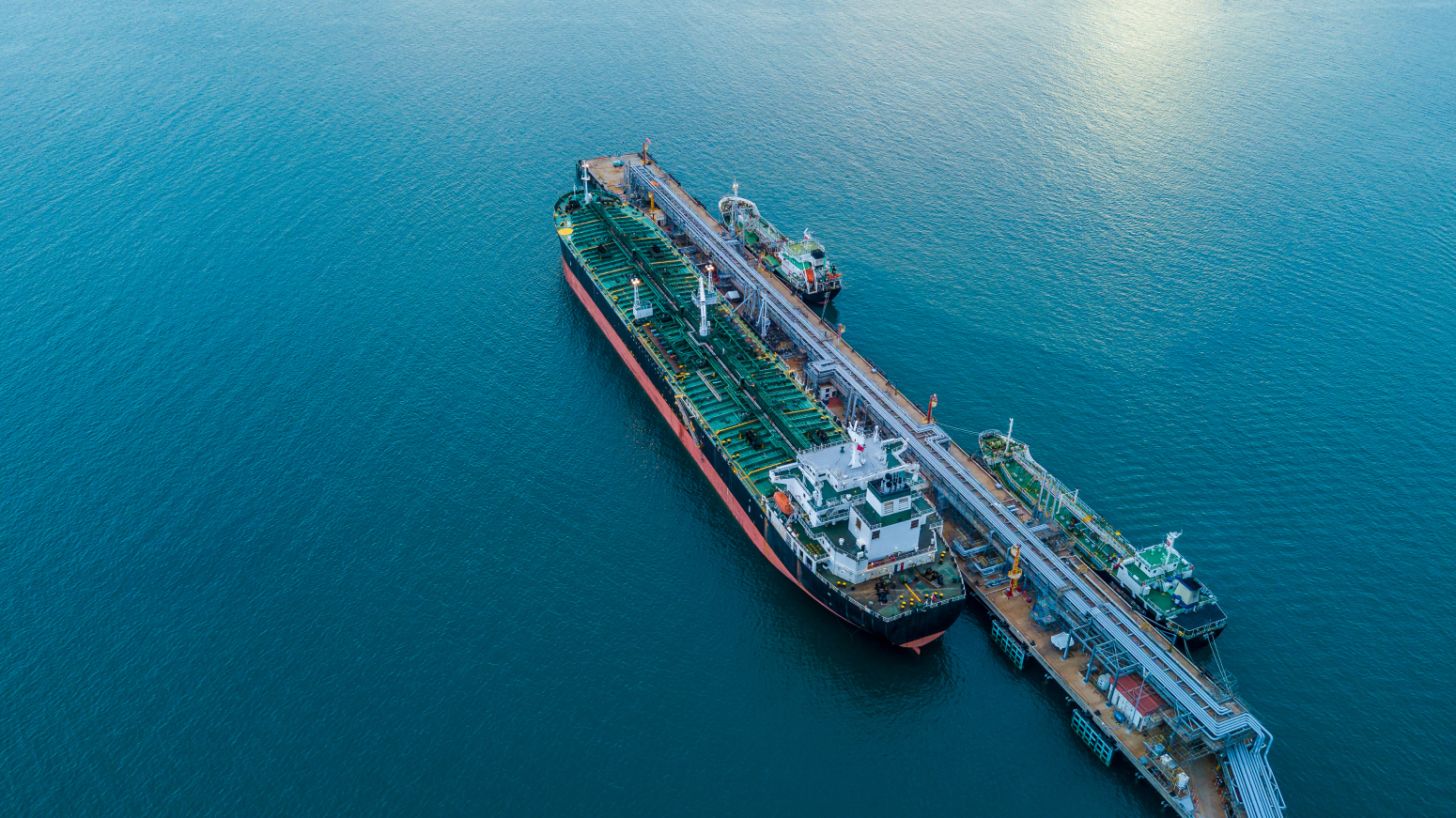
Maritime law is among the oldest legal disciplines in continuous practice — its foundational concepts of general average, salvage and bottomry predate the modern state by centuries — and remains among the most rigorously international, with the same standard contracts and conventions applied across nearly every commercial port.
Mermeroglu Legal advises shipowners, charterers, freight forwarders, port operators and shippers, with particular emphasis on Türkiye's position at the intersection of major maritime trade routes, coordinating with applicable foreign law through experienced partners.
Legal Framework
Three Intersecting Legal Frameworks
International Conventions
The body of international maritime conventions provides the foundational liability and regulatory framework: the Hague-Visby Rules governing carrier liability under bills of lading; the Convention on Limitation of Liability for Maritime Claims (LLMC); the international conventions on marine pollution (CLC, Bunker Convention, MARPOL); and the salvage and general average conventions. Türkiye is a party to the principal conventions, incorporated substantially through the Turkish Commercial Code (Law No. 6102).
Standard Industry Documentation
The substantial body of standard industry documentation — the BIMCO charterparty forms (NYPE, BALTIME, GENCON), the CONGENBILL and BIMCO bill of lading forms, the SAJ and NEWBUILDCON ship sale forms, the York-Antwerp Rules for general average — provides the contractual framework for international shipping. The 2024 BIMCO updates address ESG-aligned charter forms and decarbonisation provisions. Mastery of these forms and their interaction with the underlying conventions is the core competency of maritime practice.
National Maritime Law & Jurisdiction
The national maritime law of each relevant jurisdiction governs matters of ship registration, ship arrest, marine pollution liability and the procedural framework for maritime disputes. Many maritime matters are time-critical — a vessel detained in port or a casualty requiring salvage cannot wait for the usual pace of legal proceedings. Türkiye occupies a uniquely significant position as the sovereign over the Turkish Straits, governed by the 1936 Montreux Convention, which are critical international shipping arteries connecting the Black Sea with the Mediterranean.
Service Areas
Ship Sale & Purchase
Legal advisory on ship sale and purchase transactions — covering MOA negotiation and drafting (SAJ, NEWBUILDCON and bespoke forms), due diligence on title, encumbrances and flag registration, conditions for delivery and acceptance, and post-delivery warranty and indemnity arrangements for both new building and second-hand vessel transactions.
Charterparty Negotiation & Documentation
Advisory on the negotiation and drafting of voyage, time and bareboat charterparties — covering BIMCO standard forms, off-hire clauses, demurrage and detention provisions, safe port and safe berth warranties, cargo handling obligations and the interaction of charterparty terms with bills of lading and cargo interests.
Bills of Lading & Cargo Claims
Advisory on bills of lading issuance, endorsement and transfer — and claims arising from cargo loss, damage, shortage and delay under the Hague-Visby Rules and applicable national regimes. Advisory covers cargo interests, shipowners and their P&I Clubs, including notice requirements, time bars and the procedural framework for cargo claims under Turkish and English law.
Ship Finance & Security
Legal structuring of ship finance transactions — including first preferred ship mortgages, assignment of earnings and insurances, flag state registration requirements, intercreditor arrangements and enforcement of ship mortgage security. Advisory on cross-border ship finance engaging Turkish, English, Liberian, Marshall Islands and other flag state registration frameworks.
Marine Insurance & Casualty
Advisory on marine hull and machinery insurance, P&I Club cover, war risks and cargo insurance — including policy interpretation, coverage disputes and claims handling. Casualty matters — groundings, collisions, fire, total loss and salvage — are handled on a time-sensitive basis in coordination with average adjusters, surveyors and P&I correspondents in Turkish ports.
Ship Arrest & Enforcement
Advisory on ship arrest and counter-arrest proceedings under Turkish law and the 1952 Arrest Convention — including ex parte arrest applications, security for maritime claims, sistership arrest and the procedural framework before the Turkish courts. Advisory is available on a 24-hour basis for urgent arrest matters involving vessels in Turkish ports or the Turkish Straits.
Port Concessions & Terminal Agreements
Legal advisory on port concession projects, terminal operating agreements, stevedoring contracts and port service arrangements — including regulatory requirements under Turkish port law, investment structuring for port infrastructure, and the framework for PPP-based port development and operation under Turkish concession and BOT frameworks.
Sanctions & Regulatory Compliance
Advisory on the application of international sanctions to maritime operations — including the G7 Russian oil price cap framework, shadow fleet compliance, EU and US sanctions affecting vessel operations, cargo and counterparty screening, and the framework for Turkish Straits transit for vessels with sanctions exposure. The 2022-2025 sanctions regime has produced substantial operational complexity for Black Sea and wider maritime operations.
Maritime Arbitration & Dispute Resolution
Advisory and representation in maritime arbitration proceedings — including LMAA London arbitration, ISTAC Istanbul arbitration and SCMA Singapore arbitration — and in Turkish court litigation of maritime disputes. Advisory covers demurrage claims, off-hire disputes, general average contribution, salvage remuneration and enforcement of maritime arbitration awards under the New York Convention.
Multimodal Transport & Logistics
Advisory on multimodal transport contracts engaging sea, road (CMR Convention), rail (CIM/COTIF) and air (Montreal Convention) carriage in sequence — covering liability allocation across transport legs, non-localised loss scenarios, freight forwarder liability under FIATA standard trading conditions, and the interaction of multimodal contracts with customs and trade documentation requirements.
Sector Intersections
Sectors in Which This Practice is Engaged
Maritime and transportation practice intersects with sectors involving the international movement of goods. The principal sector intersections include:
- Transport & Logistics — the principal sector engaging maritime practice across shipping, port operations, freight forwarding and integrated logistics.
- Oil & Gas — tanker operations, LNG carrier chartering, marine terminals and offshore service vessel arrangements.
- Mining & Metals — bulk shipping arrangements, port handling for mineral concentrates and commodities trade documentation.
- Manufacturing & Industrial Products — container shipping for finished goods, supply chain logistics and trade documentation.
- Construction & Infrastructure — port concession projects, dredging works and marine construction.
- Defense & Aerospace — naval contracting, defense maritime systems and military shipbuilding.
- Energy & Renewables — offshore wind installation vessels, cable-laying operations and offshore service arrangements.
Jurisdictional Reach
Comparative Jurisdictional Overview
Maritime law operates as a substantially harmonised international framework, but national maritime jurisdictions vary in the procedural framework for ship arrest, the substantive law applied to maritime contracts and the design of maritime court systems. Mermeroglu Legal advises on matters engaging the maritime law of the following jurisdictions, among others:
Turkish maritime law is governed by the Turkish Commercial Code (Law No. 6102), Book Five, which substantially incorporates the Hague-Visby Rules and international maritime conventions. The Turkish Straits operate under the 1936 Montreux Convention, with the Bosphorus and Dardanelles transit administered through the Turkish Coastal Safety Authority.
For detailed advice on jurisdictions not listed above — including country-specific ship arrest procedures or jurisdiction-specific filing requirements — please direct your enquiry through the firm's contact channels. The firm maintains alliance relationships across the principal maritime jurisdictions and can provide coordinated advice on multi-jurisdictional matters.
Standards & Instruments
International and Regional Instruments
Maritime law operates within a particularly dense framework of international conventions and industry-issued standards. The most operationally significant include:
Hague-Visby Rules (1968 / 1979 Protocols)
The principal international framework governing the carrier's liability under bills of lading in international ocean shipping. In force in the United Kingdom, Germany, France, the Netherlands, Hong Kong, Singapore and most major maritime jurisdictions, and incorporated into Turkish law through the Turkish Commercial Code.
Montreux Convention (1936)
The Convention Regarding the Regime of the Straits governs the passage of vessels through the Turkish Straits and remains directly relevant to all ship transit through the Bosphorus and Dardanelles. The Montreux regime balances Turkish sovereignty with international navigation rights and warship transit provisions.
CLC, Bunker Convention & MARPOL
The 1992 Civil Liability Convention and 2001 Bunker Convention establish the liability framework for oil pollution from tankers and bunker fuel respectively. MARPOL 73/78 and its Annexes provide the principal international framework for prevention of marine pollution — including the 2023 Annex VI amendments addressing greenhouse gas emissions from shipping.
LLMC 1976 / 1996 / 2012 & Salvage Convention 1989
The LLMC framework provides the international convention basis for a shipowner's right to limit liability for maritime claims. Türkiye is a party to the LLMC and operates the regime under the Turkish Commercial Code. The 1989 Salvage Convention provides the international framework for marine salvage operations, including the treatment of environmental salvage. Türkiye is a party to both Conventions.
BIMCO Standard Forms & York-Antwerp Rules
The Baltic and International Maritime Council standard forms — NYPE, BALTIME, GENCON, CONGENBILL, SAJ, NEWBUILDCON — provide the principal industry-standard documentation framework for international shipping. The York-Antwerp Rules (2016 edition, with the 2024 Reprint) govern the adjustment of general average. The 2024 BIMCO updates address ESG-aligned charter forms and decarbonisation provisions.
IMO GHG Strategy & EU Decarbonisation Framework
The IMO 2023 GHG Strategy (MEPC 80) established the framework for international shipping decarbonisation targeting net-zero by 2050. The EU Emissions Trading System applies to maritime transport from January 2024, and the FuelEU Maritime Regulation establishes GHG intensity limits from 2025. Both frameworks substantially affect Turkish shipping operators serving the EU market.
Our Approach
How Mermeroglu Legal Engages
Maritime mandates frequently engage at least three legal systems: the law of the flag state, the law of the place where the cargo is loaded or discharged, and the substantive law selected in the underlying contract — commonly English law for charterparty disputes. A single multimodal shipment can engage maritime law, road transport law and air carriage law in sequence. Our practice is structured to coordinate across those legal systems through a single point of accountability.
Each mandate is led by a single matter principal at the firm, supported by an internal team drawing on maritime, transport, trade and customs, insurance, finance and dispute resolution practices. Where the matter requires advice on the law of jurisdictions outside Türkiye, we work through long-standing alliance arrangements with foreign counsel, including in London (the principal global centre of maritime arbitration), Singapore, Hamburg and the principal port jurisdictions of the Mediterranean.
We treat maritime work as a structurally time-sensitive practice. Vessel detention, cargo discharge, salvage and casualty events develop on operational timescales that legal teams must accommodate. Our approach is to maintain standing engagement protocols with operating clients and to be available on a 24-hour basis for casualty and arrest matters.
Our practice includes substantial familiarity with the operational realities of Turkish Straits transit, Black Sea shipping operations and the cross-border movement of bulk commodities through Turkish ports. This operational understanding is particularly significant in casualty and arrest matters involving Turkish jurisdiction.
INITIAL ENQUIRIES
Casualty and ship arrest matters are handled on a 24-hour response basis through coordinated internal and alliance teams.
Contact Us